
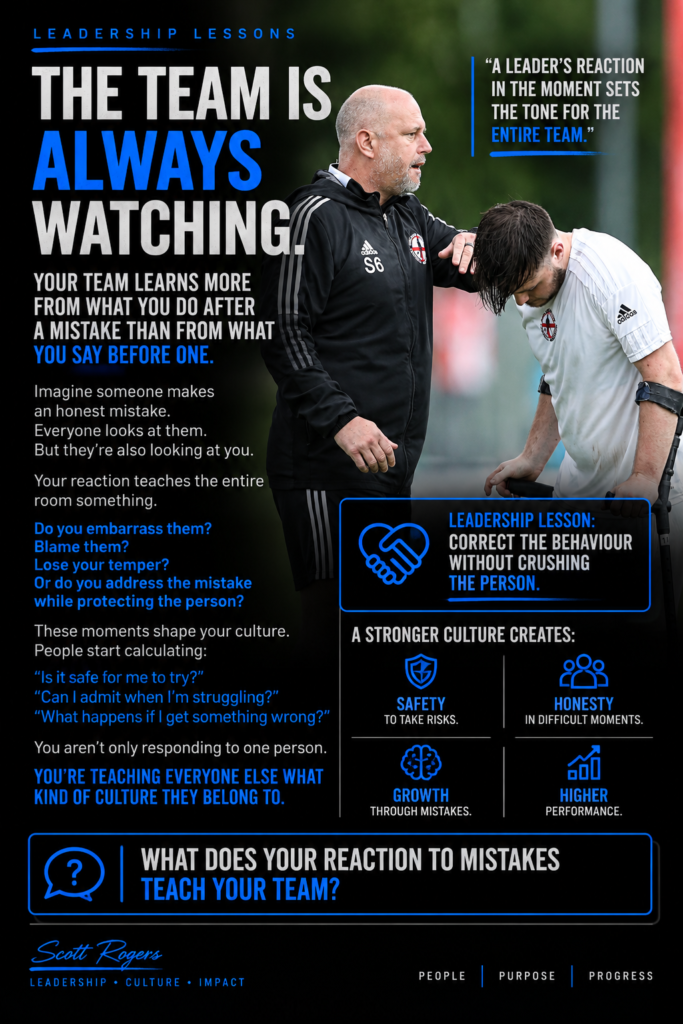
Your team learns more from what you do after a mistake than from what you say before one.
Imagine someone makes an honest mistake. Everyone looks at them. But they're also looking at you.
Your reaction teaches the whole room
Do you embarrass them? Blame them? Lose your temper? Or do you address the mistake while protecting the person?
These moments shape your culture. Quietly, people start calculating:
- "Is it safe for me to try?"
- "Can I admit when I'm struggling?"
- "What happens if I get something wrong?"
You aren't only responding to one person. You're teaching everyone else what kind of culture they belong to.
Correct the behaviour without crushing the person
This doesn't mean ignoring mistakes. Standards still matter. But there's a difference between dealing with what went wrong and making someone feel small for it.
On the touchline, I'd often wait until the right moment, keep it about the decision rather than the player, and make sure the next instruction was clear. In a classroom, it's the same. The student who's humiliated stops putting their hand up. The one who's coached tries again.
Get this right and a stronger culture follows: safety to take risks, honesty in difficult moments, growth through mistakes, and higher performance.
What does your reaction to mistakes teach your team?
Scott Rogers BEM. Leadership, Culture, Impact.
← More leadership lessons