
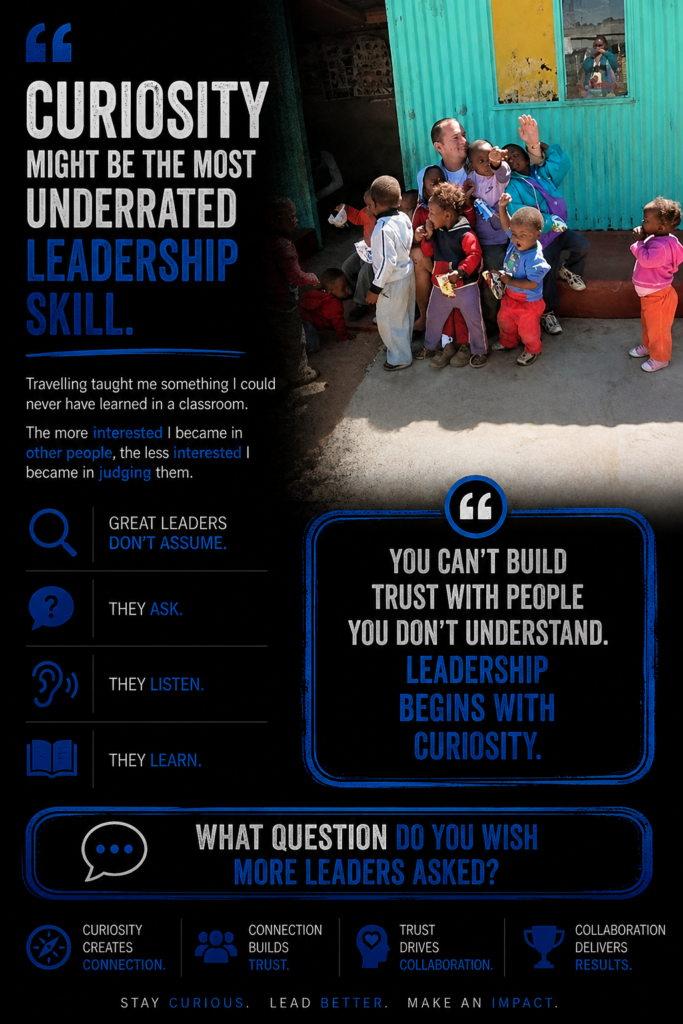
Curiosity might be the most underrated leadership skill.
Travelling taught me something I could never have learned in a classroom. The more interested I became in other people, the less interested I became in judging them.
Meeting people whose lives looked nothing like mine changed how I saw the world. It also changed how I lead.
What curious leaders do
- Great leaders don't assume. The quiet player isn't always disengaged. The student who's late isn't always lazy.
- They ask. What's going on for you? What would help? What am I missing?
- They listen. Properly. Not just waiting for their turn to talk.
- They learn. And they let what they learn change what they do.
Why it matters in a team
In the England Amputee squad, every player had a different story. Different backgrounds, different reasons for being there, different journeys through life-changing injury or illness. If I'd tried to lead them all the same way without understanding those stories, I'd have lost half of them.
Curiosity is how you find out what people need. It's how you spot the problem before it becomes a crisis, and the talent before anyone else does.
Curiosity creates connection. Connection builds trust. Trust drives collaboration. Collaboration delivers results.
Stay curious. Lead better. Make an impact.
What question do you wish more leaders asked?
Scott Rogers BEM. Leadership, Culture, Impact.
← More leadership lessons