
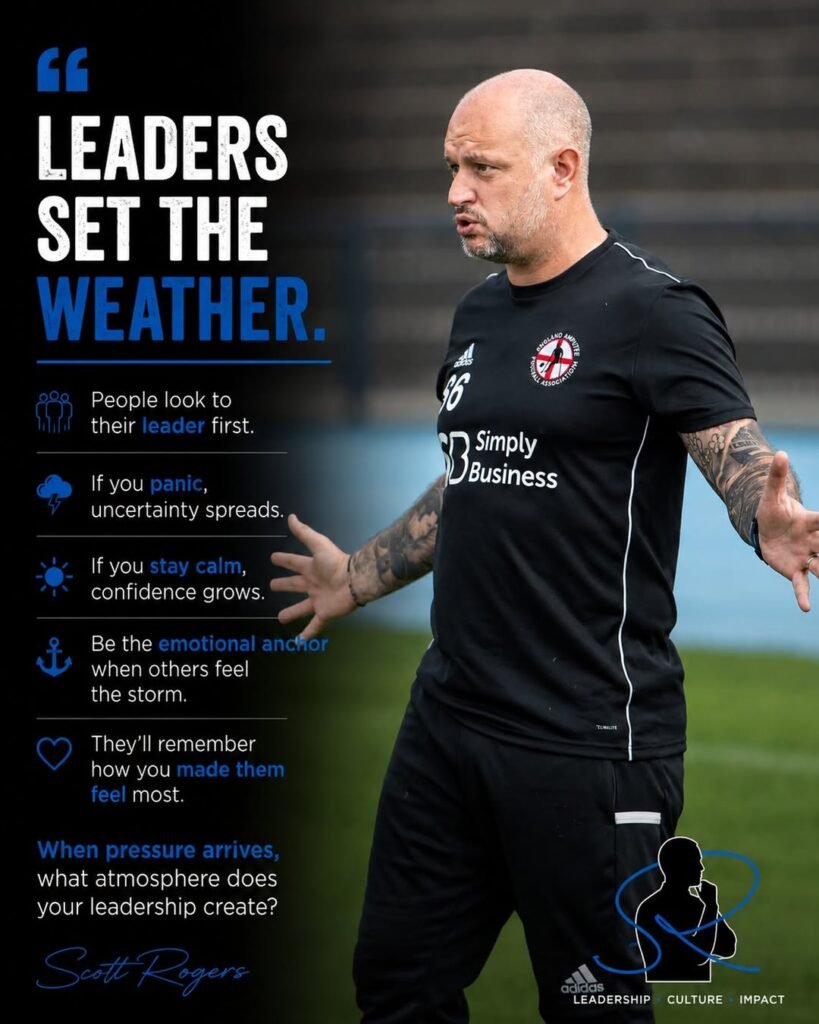
Every team has a climate. And whether they realise it or not, leaders set the weather.
I learned this on the touchline long before I could put it into words. When the game turned against us, players didn't look at the scoreboard first. They looked at the bench. At me.
What people pick up from you
- People look to their leader first. Before they decide how worried to be, they check your face.
- If you panic, uncertainty spreads. It moves through a group faster than any instruction.
- If you stay calm, confidence grows. Calm isn't the absence of urgency. It's urgency with a clear head.
- Be the emotional anchor when others feel the storm. Someone has to stay steady so everyone else can find their feet.
- They'll remember how you made them feel most. Long after the result is forgotten.
Calm is a skill, not a personality
Some people think calm leaders are just born that way. I don't believe that. Calm comes from preparation, from knowing your plan, and from having been in hard moments before and learned from them.
It also comes from self-awareness. Knowing what your tells are when you're stressed. The folded arms. The raised voice. The sharp reply. Your team notices all of it.
In a classroom on a difficult Friday afternoon, in a dressing room at half-time, or in a meeting when the numbers are bad, the question is the same.
When pressure arrives, what atmosphere does your leadership create?
Scott Rogers BEM. Leadership, Culture, Impact.
← More leadership lessons