
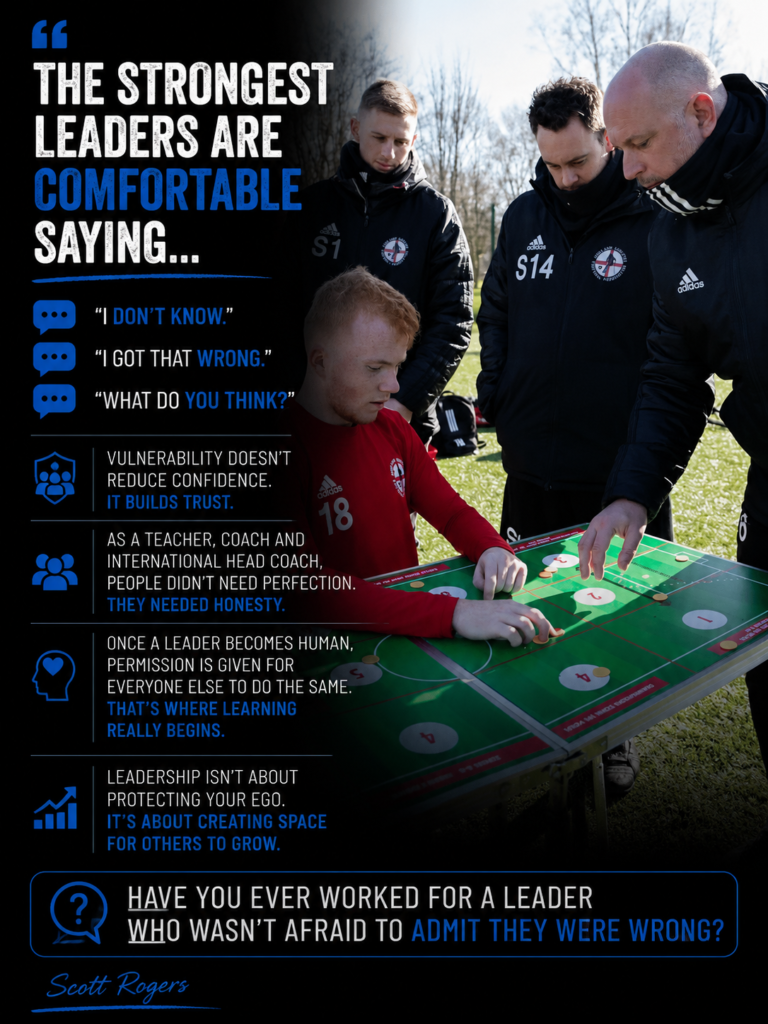
The strongest leaders are comfortable saying three simple things.
- "I don't know."
- "I got that wrong."
- "What do you think?"
For a long time, I thought leadership meant having every answer. Standing in front of a class or a squad, it felt like admitting uncertainty would be a sign of weakness.
What I learned instead
Vulnerability doesn't reduce confidence. It builds trust.
As a teacher, coach and international head coach, the people I led didn't need perfection. They needed honesty. They could tell when I was bluffing anyway. Pretending only made it harder for them to trust me when it really mattered.
Why it matters for the whole team
If the leader can never be wrong, nobody else can be either. Mistakes get hidden. Ideas stay unspoken. Players nod along in team meetings and then do something different on the pitch.
When I asked senior players what they thought about a tactical change, I wasn't giving away authority. I was getting better information, and I was showing them their view counted. Some of our best decisions came from those conversations.
Leadership isn't about protecting your ego. It's about creating space for others to grow.
Have you ever worked for a leader who wasn't afraid to admit they were wrong?
Scott Rogers BEM. Leadership, Culture, Impact.
← More leadership lessons